
May 25, 2020
COVID-19: The impact on global shipping and South Africa’s economy
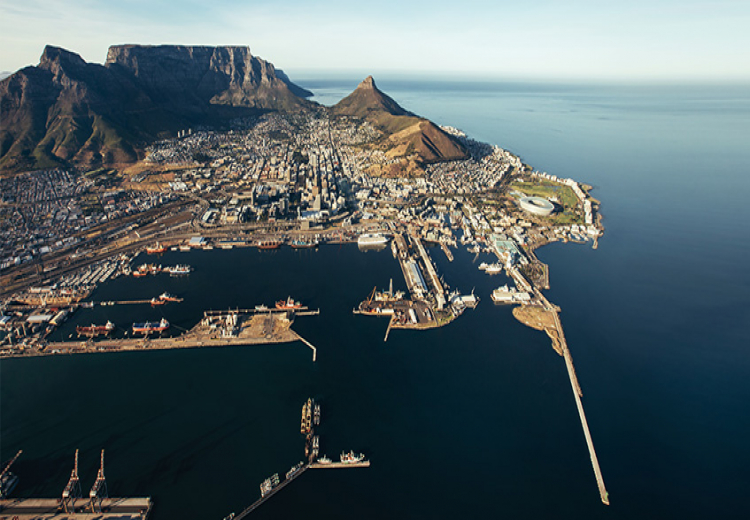
The novel coronavirus which causes COVID-19 first broke out in the port city of Wuhan, China, in December 2019. The city is a major industrial and transport hub, one of China’s 10 most populous cities, and the capital of Hubei province. The city has more than 6,000 foreign-invested companies from over 80 countries and the province produces 4.5% of China’s GDP. It is believed that the genesis of the virus came from an informal seafood market. The virus has subsequently spread around the world, leading to the World Health Organisation (WHO) declaring it a pandemic on 11 March 2020. Following the declaration by the WHO, many governments across the world embarked on numerous strict measures to lockdown their countries to “flatten” the curve of COVID-19. China was the first country to implement a shutdown, followed by Italy, the rest of Europe, and from 27 March, South Africa as well. At the core of these lockdowns was the restriction on movement of goods and people by closing entry points like air, sea and land ports, severely disrupting global value chain and supply channels. The magnitude and speed of the collapse in activity is unlike anything we have experienced in our lifetime. The worst economic downturn since the Great Depression. A phenomenon that confronts neo-mercantilism thinking.
The economic impact of the global lockdown is harshly felt, with the global freight and shipping industry being the biggest casualties. It has been reported that close to 97% of the global trade is done through the shipping industry. Global shipping markets have now declined, with the collapse in demand for goods from China having an effect on everything from container ships to oil tankers. Demand has dropped across the board, including at ports, the trucking industry, and the shipping industry. The subdued global demand is also evident in the decline in oil prices which has had a negative impact on the offshore and onshore oil and gas industry.
Due to the slowdown in demand in the shipping industry, many ports have experienced a reduction in the number of vessels calling due to the rescheduling of itineraries, as a result of the decrease in cargo volumes.
Some ports are experiencing a decline in exports, because of the closure of destination ports in Asia and Europe (IAPH, 2020). Container ships sit idle around the world, reminiscent of the global financial crisis of 2008. A Chinese coastal port also registered a drop of 10.1% of total container volumes handled compared to the first quarter of 2019.
A survey conducted by the international association of ports and harbours (IAPH) on global ports reports that over 40% of the ports experience moderate (minus 5% to 25%) and in some ports even significant decreases (in excess of a 25%) drop in the number of vessel calls. With China being the first country to institute a lockdown, global demand weakened and the slump for goods from China has had a ripple effect on container ships across the globe. Seeing major container shipping companies such as Maersk and MSC temporarily suspend their trade route between Asia and Europe due to the COVID-19 pandemic offers a vivid picture of the impact of the pandemic in the shipping and logistics industry.
Locating SA in the COVID-19 conundrum
The SA government announced a 21-day nationwide lockdown effective from 27 March, later extended to the end of April 2020 with a schedule of alert and response levels introduced from 1 May at Level 4. With this lockdown came a ban on cruise ships docking at SA sea ports and a ban on crew changes; with the restrictions on cruise shipping having a significant impact on the tourism industry. Although none of the eight seaports were closed, goods coming in from high risk countries had to be sanitized at first. This called for changes in terminal operations to scale down transportation services and operations of non-essential cargo which included closure of all automotive and multipurpose terminals at the ports of East London, Saldanha, Port Elizabeth and Maydon Wharf in Durban, with single berth for handling essential break-bulk goods and containers. In light of this, the warehousing and distribution activities at SA ports saw changes due to the fall in demand for consumer products owing to the lockdown measures. It is therefore clear that due to the COVID-19 regulations a number of port operations have been severely compromised. This has led to an adverse effect on total output; it is estimated that port operations have been operating at 60% capacity during this lockdown period.
Given that Covid-19 is likely to result in weaker demand for exports and domestic goods & services and expected disruptions to supply chains and to normal business operations, the SA Reserve bank projects the economy to contract by 0.2% in 2020 while expecting GDP growth to rise to 1.0% in 2021 and to 1.6% in 2022 (SARB MPC Statement 2020). The scope of COVID-19 induced economic disruption on the SA economy is wide. China being South Africa’s biggest trading partner, the SA economy and the export-import sector in particular, will not be insulated from the economic devastation induced by the global lockdown.
China is South Africa’s largest supplier of imports and biggest buyer of exports. Mobile phones are South Africa’s largest import category by value from China, with China supplying 85% of South Africa’s mobile phone imports (PWC, 2020). A disruption in this context is going have far reaching knock-on effects on the wider telecommunications sector. The construction industry, as another example, reported experiencing delays in delivery of construction materials like metals sourced from Asia. These delays are placing a financial burden on contractors who, under normal circumstances, carry the cost of supply-side delays (PWC, 2020).

Source: PriceWaterhouseCoopers (PWC), 2020
A significant portion of the SA economy is deeply exposed and reliant on Chinese exports. This will result in an adverse impact on various sectors such as telecommunications, automotive manufacturers, leisure & hospitality and retail establishments.
The impact of #COVID19 on maritime trade has not been one way. There is mounting evidence pointing to fact that #COVID19 has also adversely affected SA exports to the globe and adversely affecting jobs numbers. In the initial lockdown regulations, exporting of wine was considered non-essential, this effectively placed a ban on the export of bulk and packaged wine. The unintended outcome of this ban is the unfortunate loss of income for 4000 farmworkers across SA’s wine farms, exacerbating our already high unemployment rate.
Sector and policy response
Given the globalized nature of the pandemic, a global response is required. Thus far, global public health response to COVID-19 has been bold and commendable with the charge being led by respective governments. To minimize the economic impact of COVID-19, the SA government employed various fiscal and monetary policy measures, these include increased liquidity into the domestic market to stimulate credit demand and increased fiscal reprioritisation towards social security measures.
From a sector perspective, more needs to be done, especially about the restrictions on crew changes at Sea Ports (uplift the measures to allow crew changes through a 14-day quarantine as applied on vessels). Sector representations need to be made to the government about the necessity to ease the restrictions on crew changes. These representations will have to be coordinated to avoid duplication and overlapping, and institutions such as the SA Maritime Safety Authority possibly leading the coordination of a sectoral response. While the need to limit social interaction and maintaining social distancing is understandable, it cannot come at the expense of seafarer crew members who are stuck onshore or at sea. Mass testing of workers currently at work and returning to work will have to be considered, especially upon the re-opening of the closed terminals in phases.
No one could have imagined a respiratory disease causing the economic and social turmoil that it has, but despite this fact, the global economy needs to keep running. With that said, the government will have to strike a careful balance between preserving public health without compromising the country’s capacity to participate in international maritime trade.
About the author
More Articles

September 19, 2024
-
Letter from the CEO Mr Odwa Mtati
August 06, 2024 -
WSU Researchers Equipped with Deep Water Survival Skills
July 19, 2024 -
Navigating The High Seas
July 03, 2024 -
Empowering Maritime Talent
July 03, 2024 -
Setting Sail with SAIMI
July 03, 2024 -
Empowering Women in Maritime
July 03, 2024 -

Enabling World Leaders in Marine Robotics
March 24, 2023 -
IMEC IS COMING TO SOUTH AFRICA
November 26, 2022 -

Discover Your Next Big Move By "Diving In"
March 07, 2022 -
Women share how they have ‘risen above the tide'
September 03, 2021 -

Youth still optimistic about a bright future for seafarers
August 24, 2021 -

Women's Month Webinar - Rising above the tide
August 20, 2021 -
Women's Month Webinar
August 20, 2021 -

-

-

Explore a career in the maritime industry – for mahala!
July 28, 2021 -

Youth to have their say on the future of seafarers
June 18, 2021 -

-

The Economic Contribution of the Oceans Economy
June 02, 2021 -

Solar Boat going solo soon in Nelson Mandela Bay
May 31, 2021 -
Growing the Oceans Economy Webinar
May 26, 2021 -

No borders or limits for Ocean Governance in Africa
April 28, 2021 -

-

Maritime Framework needed to steer Bay
March 01, 2021 -

FESTIVE GREETINGS
December 18, 2020 -

-

"AFRICA MUST ADAPT SWIFTLY" - OR GET LEFT BEHIND
October 23, 2020 -

2020 Vision
October 21, 2020 -
Odwa Mtati appointed new CEO at SAIMI
October 21, 2020 -

Are we ready for the Oceans Economy’s potential?
October 21, 2020 -

SAIMI Women’s Month Maritime Virtual Discussion
August 25, 2020 -

-

-

First 2016 maritime cadets take to the ocean
June 15, 2020 -

President Zuma says SAIMI will help develop skills
June 15, 2020 -

-
_165x110.jpg)
The South African International Maritime Institute
June 15, 2020 -

-
_165x110.jpg)
Maritime “Road Map” published
June 15, 2020 -

Denmark helping Kenya to refloat shipping sector
June 15, 2020 -

Partnerships sought with Chinese institutions
June 15, 2020 -

Navigating a maritime future for SA cadets
June 15, 2020 -

-
Cadet training on training ship SA Agulhas
June 15, 2020 -

South African Maritime Industry Conference - SAMIC 2017
June 15, 2020 -
SA Agulhas I berths in PE after three-month voyage
June 15, 2020 -

Nurturing the skills needed for Operation Phakisa
June 15, 2020 -
-

Vanessa Davidson appointed deputy CEO of SAIMI
June 15, 2020 -

-

Breakthrough for maritime cadet training
June 15, 2020 -

-
-

Fishing will give better returns
June 15, 2020 -
South African Maritime Industry Conference #SAMIC2017
June 15, 2020 -

Strengthening maritime research at SAIMI
June 15, 2020 -

-
UN bodies commit to supporting sustainable fisheries
June 15, 2020 -

-

Environmental “superstar” for marine waste conference
June 15, 2020 -

Founding of African chapter of World Aquaculture Society
June 15, 2020 -

Investment opportunities identified
June 15, 2020 -

Day of the Seafarer
June 15, 2020 -

-
_165x110.jpg)
New generation of black divers
June 15, 2020 -

“Waste is a human problem. There is no waste in nature.”
June 15, 2020 -

Introducing Tanaka Mugabe
June 15, 2020 -

First woman pilot for Saldanha Bay
June 15, 2020 -
-

-

Autonomous shipping could revolutionise sector
June 15, 2020 -
Shipping losses down, but new threats surface
June 15, 2020 -

-
_165x110.jpg)
Local research needed into marine cyber security
June 15, 2020 -

-

Bright Future for SA Maritime Industry
June 15, 2020 -

Trainee sea-farers on SA Agulhas arrive in Port Louis
June 15, 2020 -

-
Trainee sea-farers on SA Agulhas heading for Antarctica
June 15, 2020 -

Digital Disruption an Opportunity for SA Maritime Sector
June 15, 2020 -

SA Youth Poised to Ride New Wave of Shipping
June 15, 2020 -

Fact-Finding in the Philippines
June 15, 2020 -

-

-

Exploring Careers Through Furthering Education
June 02, 2020 -

Internship Boosts Career at Sea
June 02, 2020 -

History Made as SA Agulhas 'Manned' By All-Female Crew
June 02, 2020 -
2017: Full Speed Ahead
May 12, 2020 -

US Students Learn from Bay Maritime Sector
May 12, 2020 -

-

Pupils learn the ropes at NSRI camp
May 12, 2020 -
Aquaculture skills in the spotlight
May 12, 2020 -

Cadets recount Antarctic adventure
May 12, 2020 -

-

US maritime students visit SA shores
May 12, 2020 -

-

Welcome aboard, Soraya
May 12, 2020 -

SAIMI provides answers at careers expo
May 12, 2020 -

Ratings trainees chart new course
May 12, 2020 -

Scrabbling to support seafarers
May 12, 2020 -

SAIMI opens new headquarters
May 12, 2020 -

National Marine Week 2018 : Litter knows no waste!
May 12, 2020 -
-

SAIMI’s new bursary scheme to empower women
May 12, 2020 -

-
SAIMI supports ocean governance in Africa
May 11, 2020 -

SAIMI appoints manager for National Cadet Programme
October 06, 2019 -

Fisherman's friend
October 06, 2019 -

SAIMI and FADI empower subsistence fishers
October 06, 2019 -

Women encouraged to dive-in to the maritime sector
October 06, 2019 -

New initiative to grow South Africa’s maritime culture
October 06, 2019 -

Dive In Exploring South Africa’s maritime opportunities
October 06, 2019 -

Coastal communities now also ‘fishing for bricks’
October 06, 2019 -

Maritime high schools for maritime careers – a subject for debate
October 06, 2019